
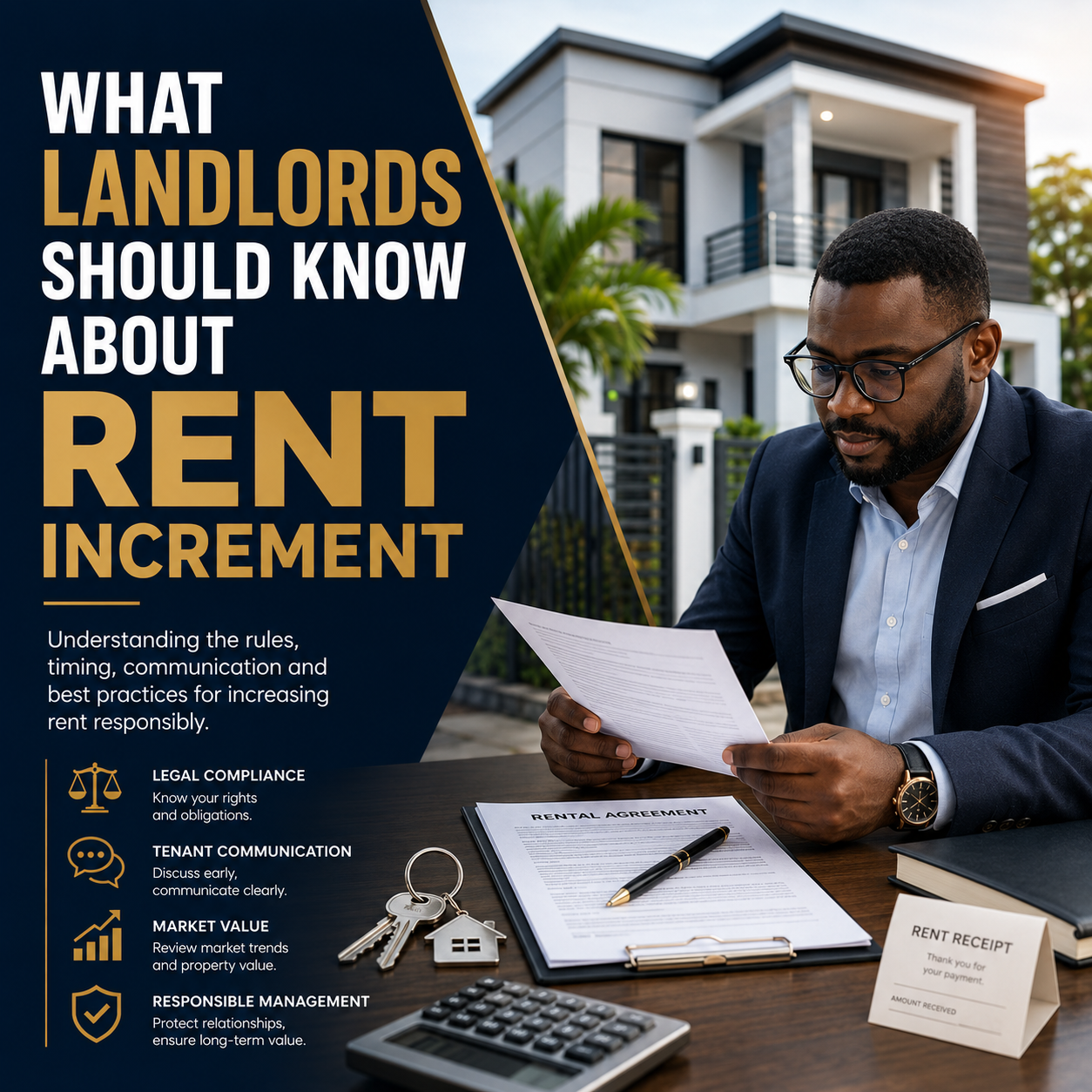
You can increase the rent. But if you handle it badly, you may lose more than the extra rent will ever make you.
A rent increase is not just about picking a new figure and sending a message to your tenant.
There is a right way to do it.
And surprisingly, many landlords get the amount right but get the process completely wrong.
- HOW MUCH SHOULD YOU INCREASE THE RENT?
There is no magic percentage that applies to every property in Nigeria.
The question should not simply be:
“How much more can I charge?”
It should be:
“What is this property reasonably worth in the current market?”
Look at comparable properties in the same neighbourhood. Consider the property’s condition, location, amenities, improvements and the prevailing rental market.
If similar properties are renting for ₦X and yours is significantly below that, an increase may be reasonable.
But if you suddenly double the rent simply because “everything is expensive,” don’t be surprised when your tenant pushes back.
Your rent should have a market basis, not just a landlord’s need for more money.
- HOW OFTEN SHOULD YOU INCREASE IT?
This is where things can get tricky.
Rent increases are subject to the applicable tenancy laws and the terms of the tenancy, and these can differ from one state to another.
So don’t assume that because you increased rent last year, you can automatically do it again this year.
Before issuing an increase, check the rules applicable to the property and the type of tenancy involved.
And even where the law does not prescribe a specific frequency, constantly increasing rent without a reasonable basis can damage your relationship with a good tenant.
Sometimes, keeping a reliable tenant for another year is worth more than squeezing out the highest possible rent.
- HOW DO YOU COMMUNICATE THE INCREASE?
This is where many landlords lose good tenants.
Imagine paying your rent faithfully for years and then receiving a WhatsApp message:
“Your rent is now ₦3 million. If you don’t like it, leave.”
Technically, the landlord may want to increase the rent.
But professionally?
That’s a terrible way to handle it.
A rent increase should be communicated formally and with adequate notice in accordance with the applicable law and tenancy arrangement.
Explain the new rent clearly.
Give the tenant reasonable time to consider it.
Where appropriate, explain that the review reflects factors such as prevailing market rents, improvements or increased operating costs.
And if there is room for discussion, allow the conversation to happen.
HERE’S THE PART MANY LANDLORDS MISS 👇🏾
Your tenant doesn’t necessarily leave because the rent increased.
They often leave because of how the increase was handled.
A reasonable increase communicated professionally can be accepted.
An unreasonable increase delivered disrespectfully can turn a good tenant into a former tenant.
And then the landlord has to deal with:
Vacancy.
Advertising.
Inspections.
Negotiations.
Repairs.
Agency costs.
And the uncertainty of finding the next tenant.
So before asking:
“How much more can I charge?”
Ask:
“What is the right rent for this property, and what is the right way to communicate it?”
Because good property management isn’t just about collecting more money.
It’s about protecting the property’s income, value and relationships over the long term.
And remember: tenancy laws differ across Nigeria. Before implementing a rent increase, confirm the requirements applicable to your property and tenancy.
Landlords: Have you ever lost a good tenant because of a rent increase?
Tenants: What is the worst way a landlord has ever communicated a rent increase to you?
Tell us in the comments. 👇🏾

Join The Discussion